Spice It Up

Pantry Staples

At our regular meeting Thursday, March 26 2015, Michelle Axtell talked about flavoring food with herbs and spices instead of salt.  She said that having spices on hand as pantry staples was important and listed 25 spices that we could keep in our pantry.  Old spices that have lost their aroma should be thrown out.  “Check your pantry.  If you can’t remember the last time you bought spices, they are probably no longer good.”

  • Tip:

    Check your pantry. If you can’t remember the last time you bought spices, they are probably no longer good.

Cooking with Herbs and Spices

Cooking techniques vary depending on whether you are using a fresh or dried herb or spice.  For example, dried herbs and spices are typically best when added early in the cooking process so that they rehydrate whereas fresh herbs and spices are best added at the end.

Garlic, Ginger, and Peppers

Garlic, ginger, and peppers are all good choices to add flavor to foods.  Add as much garlic to your dish as you like.  A tip for adding a small amount of flavor is to rub the garlic clove in heated oil that will be used for sauteeing

Ginger also has many uses.  Fresh ginger adds a “spicy, slightly hot taste” to your dish.  It can be used in many Asian dishes, but be creative!  Ginger adds a great zip.

Peppers can vary in amount of heat and flavor.  Michelle mentioned banana, poblano, jalapeño, serrano, and cayenne peppers.  You can increase the heat of a pepper by cooking it longer or lessen it by removing the seeds and skin.

Adding Acidity

Many people don’t think of acidity as adding flavor to their dishes, but the tart flavor of acids is one of the basic flavors.  Try adding citrus juice, vinegar, wine, and tomatoes.  Yogurt and buttermilk are also acidic ingredients.  Add acids at the end of cooking to prevent a harsh taste.

Recipe:  Caprese Chicken

Ingredients:

4 skinless chicken breasts
kosher salt and freshly ground black pepper
1/2 tsp paprika
2 Tbsp olive oil, divided
2 Tbsp roasted garlic
2 pints cherry tomatoes, halved
2 shallots, finely sliced
10 large basil leaves, finely chopped
8 oz fresh buffalo mozzarella, sliced in 1/2 inch thick slices
basalmic vinegar, to taste

Directions:

      1. Salt and pepper both sides of the chicken breasts and set aside.
      2. In a large saute pan over medium-high heat, warm 1 Tbsp olive oil.  Add chicken, cover pan, and cook for about 10 minutes.  Flip chicken breasts and continue cooking until the chicken is cooked thoroughly (or has reached and internal temperature of 165 degrees F).
      3. While chicken is cooking, in a medium sauté pan over medium-high heat, warm remaining olive oil.  Add garlic and cook for about 1 minute, or until fragrant.  Add tomatoes and continue sautéing until tomatoes’ skin starts to soften and wrinkle, about 5 minutes.  Remove from heat and stir in basil.  Set aside.
      4. Once chicken has reached desired doneness, top the tops of each chicken breast with 2 slices of mozzarella.  Pour tomato mixture on top.  Cover pan with lid once more and let the mozzarella melt, about 1-2 minutes.
      5. Lastly, drizzle with a splash of basaltic vinegar and serve immediately.

About Michelle Axtell

Michelle Axtell, MS, RD, LD, is a registered dietician in Oklahoma.  She has been the director for Nutrition Services at Stillwater Medical Center for the last six years.

Previously, she was the Director of Nutrition at Grady Memorial Hospital for nine years and before that, she was at the Cushing Regional Hospital for one year.

Michelle received her Master’s Degree from Oklahoma State University and her undergraduate degree from Southeast Missouri State University. Michelle enjoys talking about the wonders of food and nutrition.

Note:  This presentation was originally given by Matthew Peters, Diabetes Care Services, at Stillwater Medical Center.


Diabetic Action Plan

Anita Callfield

Anita Callfield speaks about taking action.

At our Aug 28 meeting, Anita Callfield spoke about her lifestyle changes after she was diagnosed with diabetes. At a routine check up, Anita’s doctor noticed that she lost weight without trying, had “fruity” breath, which is a sign of ketoacidosis, and general malaise. Her blood sugar and A1C were at dangerous levels and she had to start taking insulin injections immediately. She described herself at the time as an “out of control” diabetic. She knew she had to start making changes out of fear of diabetic complications. “Fear is a great motivator,” she said.

Anita started following an “Action Plan,” which consisted of changes in diet, exercise, managing stressors, and regular medical check ups and testing. Specifically, she suggested the following:

Anita’s Action Plan

  • See your doctor: Have your thyroid function, vitamin D, etc., checked.
  • Eat 6: Eat three small meals and three snacks each day.
  • Eat right: Eat 1/2 vegetables, 1/4 protein, and 1/4 carbs. Eat good fats–nuts, olives, avocados, etc.
  • Walk: Walk at least 20 minutes without stopping every other day. Start out with 5 or 10 minutes. Gradually do more time. Start out slowly. Increase speed over time until you are walking like you are very late. Wear shoes that have a good arch support.
  • Relax: Learnto self-calm during stressful times. Use prayer, mantras, etc., to calm down when you feel the stress, and do it immediately to try to limit the cortisol dump.

As Anita mentioned, exercise can help regulate blood sugar. Regular exercise increases your body’s sensitivity to insulin, and since insensitivity to insulin is the cause of type II diabetes, can help fight the disease.

You may have also been surprised to hear that relaxation can have a positive impact on the health of diabetics. Stress reduction and relaxation can help one maintain a healthy weight, which, of course, is essential to both diabetics and non-diabetics alike.

Here are the titles of the books Anita referenced in the program:

60 Ways to Lower Your Blood Sugar — Dennis Pollock
The New Bible Cure for Weight Loss — Don Colbert, MD
The Bible Cure for Weight Loss and Muscle Gain — Don Colbert, MD
The Glycemic Load Diet — Rob Thompson, MD
Wheat Belly: A 30 Minute Summary — Dr. William Davis

Anita presented a very interesting program and gave us a lot to think about. Thanks Anita, and thanks, Tammy, for arranging the program.

BINGO with a Twist

BINGO Meets Jeopardy

bingo and trivia

Lelia led us in a BINGO/Trivia game.

Lelia led us in a game reminiscent of BINGO. However, in this version of the game, we had to work for our tiles. The group was divided into teams and, when it was their turn, each team was allowed to pick the tile they wanted. To claim the tile, however, the team had to correctly answer the question assigned to the tile. The question categories were as follows:  Nutrition, Exercise, Weight Loss, and Will Power.

frog crossing finish line

The Green Frogs took TOPS honors.

Once a team claims a tile, no other team can claim it. Like in BINGO, the first team to claim all the tiles horizontally, vertically, or diagonally wins. No team was able to claim 5 tiles in a line, so the winner was the team with the most correctly answered questions. The Green Frog Team, Tammy, Patty, and Maxi, had the most correctly answered questions and thus won the prize. Way to go Frogs!

What a fun game and creative idea. Thanks, Lelia!

Weight Loss BINGO!

B-I-N-G-O!

Betty led us in a game of BINGO.

Betty led us in a game of BINGO.

At our March 20, 2014 meeting, Betty led us in a game of bingo. The cards had weight loss terms on them. The terms included the following:  nutrition, inspiration, choice, menus, hope, etc. What a great way to lighten up some of these terms with which we struggle every day. Thanks, Betty!

Origami Paper Folding

Linda shows us how to make paper boxes.

Linda shows us how to make paper boxes.

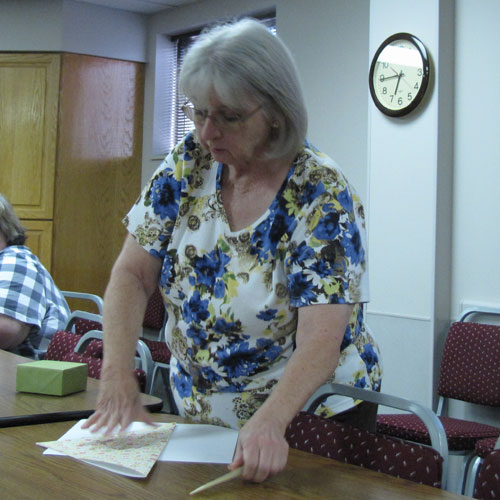
Linda showed us how to make paper boxes from scrapbook paper. By shopping around, you can find inexpensive scrapbook paper. In addition, folding paper/origami can keep your hands busy so that you don’t reach into that bag of chips! The pretty boxes that result are an added plus.

How to Break Your Eat-Repent-Repeat Cycle

The Mindful Eating Cycle

Bert discussed mindful eating during the program portion of our meeting.

Bert discussed mindful eating during the program portion of our meeting.

Last week, we discussed the Mindful Eating Cycle. By answering the six questions below, we can create awareness about our eating decisions, and that is “the first step to permanently changing the way you eat.”

Ask Yourself…

  • Why do I eat?
  • When do I want to eat?
  • What do I eat?
  • How do I eat?
  • How much do I eat?
  • Where do I invest my energy?

Eat-Repent-Repeat Cycle

In last weeks program, we also learned about three common eating patterns:

  • Instinctive eating
  • Overeating
  • Restrictive eating

People often switch back and forth between overeating and restrictive eating patterns, which creates the eat-repent-repeat cycle.

Mindful Eating

How can we break this vicious cycle? We eat mindfully–with “intention and attention.”

The Bottom Line

“You’re in charge. Strive for balance, variety, and moderation, not just in the way you eat, but in the way you live your life.”

Thanks, Bert, for presenting such a thought provoking program.

We Can Defeat the Eating Cycle!

The Vicious Eating Cycle

This week, Bert presented information about the eating cycle. When we are caught in the eating cycle, we overeat, repent, then repeat. Bert related, “Perhaps you beat yourself up for being lazy or not having willpower. It’s true for me.”

Perhaps you beat yourself up for being lazy or not having willpower.
–Bert

But, what should you do when you stumble? Should you wait until the next day to change your habits? You can change your habits anytime, including immediately after you stumble.

Bert discussed several eating patterns:

  1. Instinctive eating cycle: Those with an instinctive eating style maintain a healthy weight effortlessly. They eat to fuel their body. They eat when they are hungry, they eat what they want, have no rigid rules, and eat to satisfy hunger. They stop eating when they are not hungry.
  2. Overeating cycle: Someone caught in the overeating cycle is driven by triggers: eating for reasons other than hunger. For example they may eat because of intense emotions, because it is meal time or for many more reasons. Since hunger wasn’t the signal to start eating, there is no trigger to stop.
  3. Restrictive eating cycle: The restrictive eating cycle has many rigid rules. These rules may come from an expert or be self-imposed. Fuel needs or real issues, such as emotional eating is not addressed. This type of eating also uses a great deal of mental and emotional energy. Many feelings, thoughts, and emotions still revolve around food.

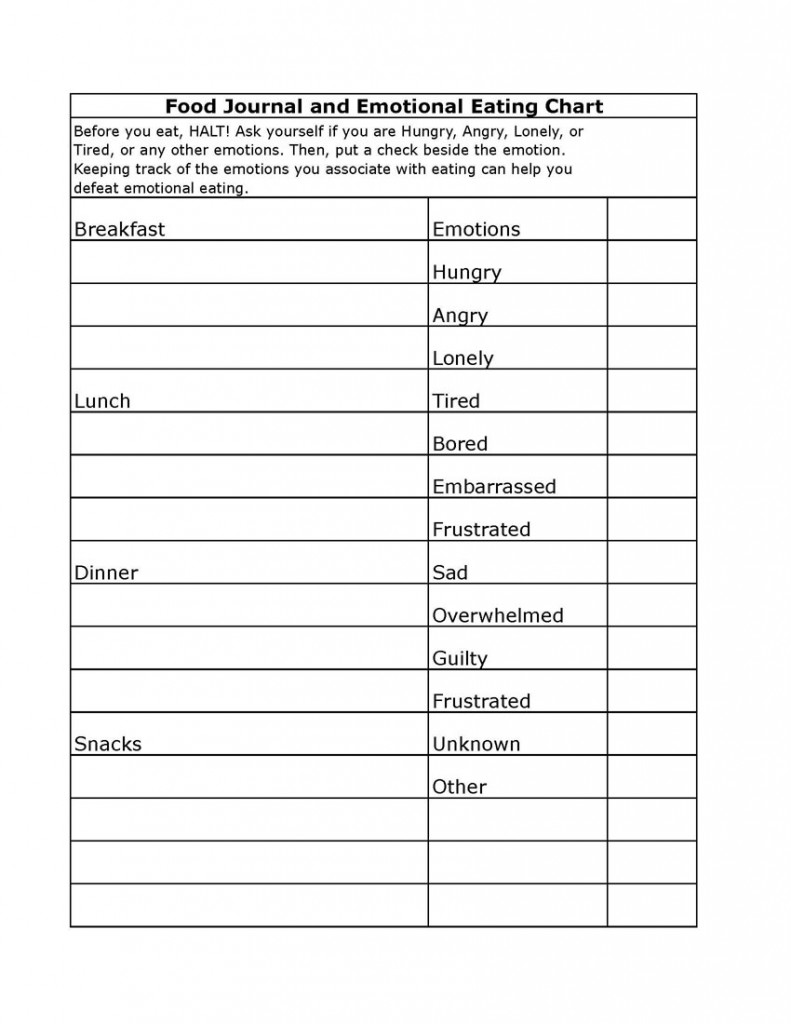
I can personally attest that emotional eating can defeat weight loss efforts. I developed the chart below to help us defeat emotional eating. It employs the acronym HALT. Before you eat, ask yourself what emotions you have at the moment. Are you actually Hungry, or are you Angry, Lonely, or Tired? Chart other emotions, too. If you like, follow the links to print it out.

Click here for the downloadable pdf: Emotional Eating Chart

emotinal-eating-webv


The Science of Weight Loss: YouTube Style

For our program this week (2-20-14), we watched video segments about weight loss and then discussed the different topics. One of the videos (“What Visceral Fat Does To The Body“) was from The Doctors TV show and two others, “Scientific Weight Loss Tips” and “The Science of Appetite – Beating Overeating” were produced by ASAP Science. Below are links to the videos with a brief description.

What Visceral Fat Does To The Body?

This video from The Doctors discusses visceral body fat, which is the fat that surrounds the organs and explains the hormonal and biochemical consequences of too much of this type of fat.

Scientific Weight Loss Tips

This video from ASAP Science discusses the science behind proven weight loss strategies. Check it out, and you may be surprised at how easy it would be boost your weight loss by incorporating some of these tip into your daily life.

The Science of Appetite – Beating Overeating

What do hormones and neurotransmitters have to do with weight and overeating issues? Find out in this video.

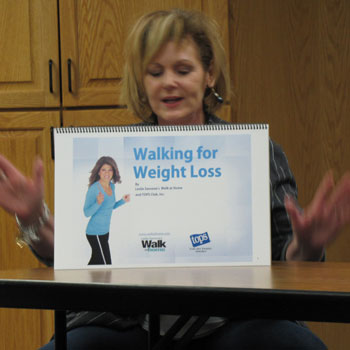
Maria Presents ‘Walking for Weight Loss’

Maria Alexander, TOPS Area Captain

Maria Alexander, TOPS Area Captain

About Maria
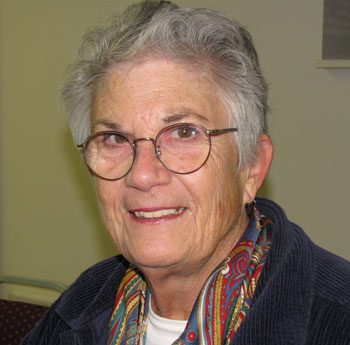
At our Jan. 30, 2014, meeting, we were joined by our Area Captain, Maria Alexander. For those of you who don’t know Maria, she is the Area Captain for Garfield, Kay, Kingfisher, Logan, Pawnee & Payne counties. She has been a TOPS member for 12 years and achieved KOPS status in December of 2011. We were glad to have you visit our chapter, Maria, and appreciate all your hard work!

Note to readers: At the meeting, every time Maria said “exercise” we marched in place 5 steps.   Thus, to keep in the spirit of the program, every time you read the word “exercise” march in place 5 steps. At the conclusion of the article, I’ll tell you how many extra steps you’ve taken.
A Little Exercise Each Day Goes a Long Way
Maria presented “Walking for Weight Loss.” She shared the story of one member, Beverly, who lost 200 pounds by walking. She did it by walking a little more each day and eventually began competing in 5K races.

Walking is something everyone can do.
–Beverly, TOPS member

Maria tells about 'Walking for Weight Loss'

Maria tells about ‘Walking for Weight Loss’

Walking is Good for the Mind and Body
As you may know, exercise has many health benefits. Exercise combats obesity, heart disease, levels blood glucose, and lowers cholesterol and triglycerides. But, did you know that exercise has positive effects on your mental health? Exercise increases the production of serotonin and other endorphins, which improves your mood and combats depression. In addition, exercise increases relaxation, which is also good for both mind and body. Reduced appetite and increased motivation to lose weight are other benefits of exercise. Exercisers have also been shown to have a longer life than non-exercisers.

If the Shoe Fits…
Shoes are the only equipment needed for walking, but wearing a good pair of athletic shoes is important. Shoes, when worn regularly for walking, should be replaced every 4-6 months. When buying a walking shoe, keep the following 3 criteria in mind: comfort, support, and reduced impact. Your entire body will benefit from shoes that perform well in all three areas.
Ready…Set…Walk!
zeus leashMy dog, Zeus, is ready to exercise. Are you?

Congratulations, readers! You have added 60 steps to your total today.